
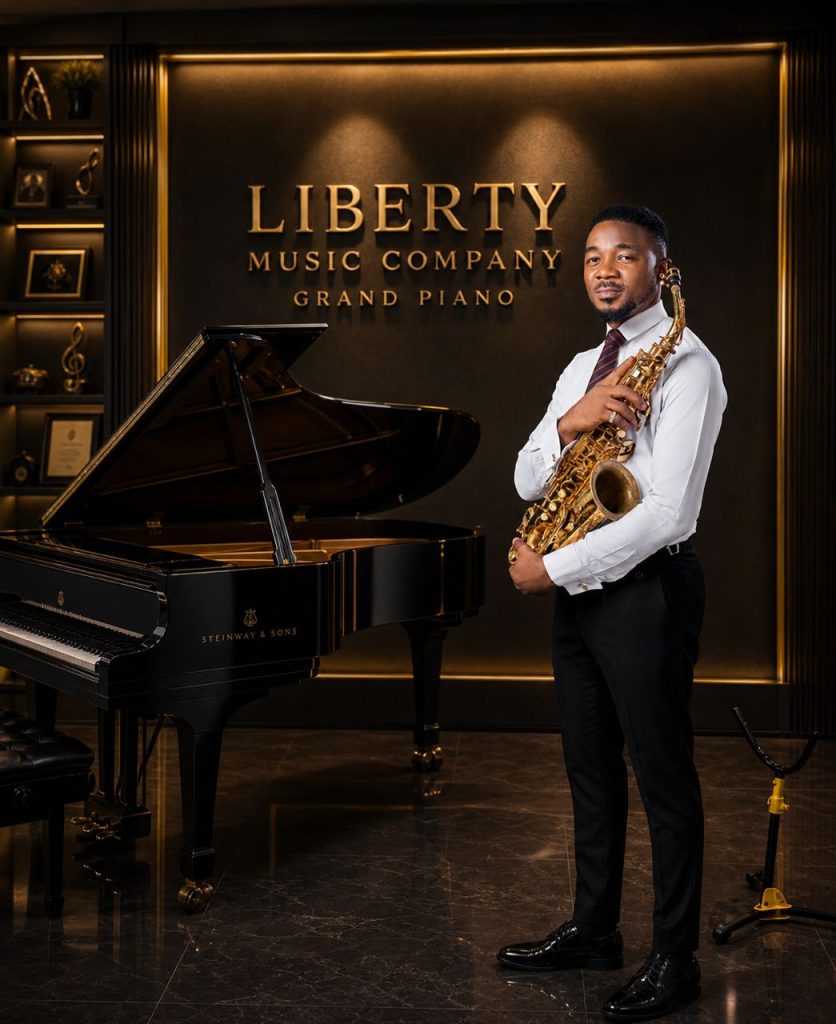
Music education is often approached as the transfer of technical knowledge — scales, theory, repetition, and performance accuracy. While these things are important, I believe music education should first develop the human being before developing the musician.
That belief is the foundation of how we teach at Liberty Music.
Over the years, I have worked with children and teenagers from different backgrounds, personalities, and learning abilities. One thing became increasingly clear:
many students do not struggle because they lack talent. They struggle because traditional learning environments often fail to engage their creativity, confidence, and individuality.
A child who feels pressured, unseen, or constantly compared may eventually disconnect from learning entirely, regardless of potential.
This is why I approach music pedagogy differently.
At Liberty Music, we do not merely teach music. We use music as a tool for growth, expression, confidence, discipline, and creativity.
We believe learning becomes more powerful when students feel psychologically safe, creatively engaged, and personally valued.
For many young learners, music is more than an extracurricular activity. It becomes a pathway for developing focus, emotional intelligence, self-expression, resilience, and confidence.
This is especially important in today’s world where children are growing up in highly distracted environments that often suppress curiosity and originality.
Creativity cannot thrive in fear.
That is why our learning systems are built around engagement rather than intimidation, discovery rather than pressure, and structure without removing freedom.
A student learns faster when they are emotionally connected to the process.
This does not mean removing discipline or excellence. In fact, excellence becomes more sustainable when students genuinely enjoy learning and understand their progress.
At Liberty Music, we combine structured training with modern learning methods that help students:
- build musical confidence,
- strengthen performance ability,
- improve concentration,
- develop creative thinking,
- and cultivate consistent learning habits.
I also strongly believe that music education should evolve with the realities of modern learners.
Today’s students process information differently. Attention spans, digital exposure, emotional development, and learning behaviors have changed significantly. Teaching methods must evolve accordingly.
This is why I integrate creativity, psychology, engagement systems, and modern learning approaches into music education.
Good pedagogy is not simply about information delivery.
It is about designing environments where learning becomes transformational.
When children are taught well, they do not only become better musicians.
They become more expressive thinkers, more confident communicators, and more disciplined individuals.
That is the real goal.
Music education should not only produce performers.
It should help shape people.
And that is why I teach the way I do.
— Mike Adewale